Introduction
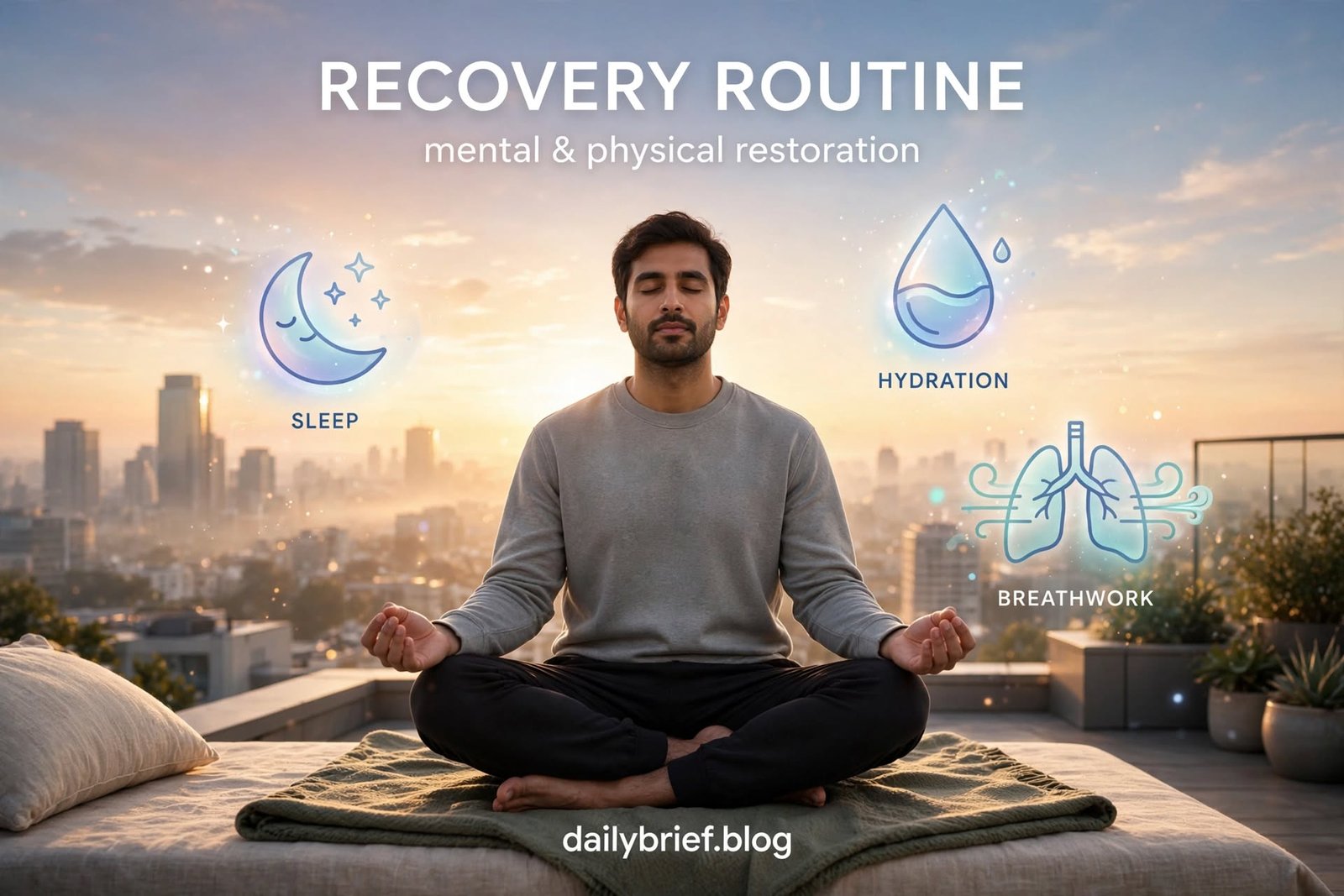
A recovery routine is a set of daily habits that helps your body and mind rest, recharge, and adapt to everyday physical and mental demands. It may include getting enough sleep, eating balanced meals, drinking water regularly, engaging in gentle movement, and making time to relax. Whether you exercise regularly, work long hours, manage a busy schedule, or simply feel mentally drained, a consistent recovery routine can help you take better care of yourself.
Recovery is not limited to athletes or people who have completed an intense workout. Everyday activities, demanding work, inadequate sleep, and prolonged stress can all leave you feeling tired. Giving yourself time to recover helps you maintain a healthier balance between activity and rest.
The best recovery routine is not necessarily complicated or expensive. Instead, it focuses on habits you can maintain consistently and adjust according to your energy levels, lifestyle, and personal needs.
In this guide, you will learn what a recovery routine involves, why recovery matters, which habits are worth prioritizing, and how to create a practical daily schedule. You will also discover common mistakes to avoid and situations where professional guidance may be necessary.
What Is a Recovery Routine?
A recovery routine is a collection of habits designed to support physical restoration, mental relaxation, and general well-being after periods of activity or stress.
For example, someone who spends the day working at a computer might benefit from regular movement breaks, a balanced evening meal, and a consistent bedtime. Meanwhile, someone who exercises regularly may need additional attention to rest days, workout intensity, hydration, and nutrition.
A recovery routine can include:
- Sleep and rest: Giving your body enough time to recover overnight.
- Balanced nutrition: Eating a variety of foods that supply energy and essential nutrients.
- Hydration: Replacing fluids lost through normal daily activity and sweating.
- Gentle movement: Walking, light stretching, or other comfortable activities.
- Mental relaxation: Practicing breathing exercises, meditation, or quiet activities.
- Work-life balance: Creating boundaries that allow time away from demanding tasks.
The exact combination depends on your circumstances. Recovery after exercise differs from recovery after surgery, illness, or a significant emotional experience, so the routine should match the situation.
Why Is a Recovery Routine Important?
Daily activity places different demands on the body and mind. Exercise challenges muscles and energy systems, while demanding work and personal responsibilities can contribute to mental fatigue. Sleep, appropriate nutrition, and rest provide opportunities for the body to maintain normal functions and recover.
The World Health Organization identifies healthy eating, physical activity, sufficient sleep, and social connection as important elements of self-care and well-being.
A thoughtful recovery routine can help you establish healthier habits in several areas.
1. Supports Physical Recovery
After exercise or physically demanding work, your body needs time and adequate nutrition to recover. Rest and appropriate activity levels help you prepare for future demands.
For people who exercise, recovery also means avoiding excessive training without sufficient rest. Gentle movement may be useful after some workouts, but complete rest can be more appropriate when you are ill, injured, or unusually fatigued.
2. Helps Maintain Healthy Sleep Habits
Sleep is an important part of recovery because it supports normal physical functioning, mood, concentration, and overall health.
Most adults need at least seven hours of sleep per night, although individual needs vary. A consistent bedtime, a comfortable sleeping environment, and reduced exposure to stimulating activities before bed can support better sleep.
The Centers for Disease Control and Prevention provides additional guidance in its sleep and heart health resource.
3. Encourages Better Stress Management
Mental recovery involves giving yourself time away from continuous demands. Short breaks, relaxing hobbies, social interaction, and mindfulness practices can help you manage everyday stress.
These activities are not a substitute for professional mental health care when it is needed. However, they can form part of a balanced approach to everyday well-being.
4. Promotes Consistency in Daily Activities
When you balance activity with recovery, it becomes easier to recognize when you need rest and when you have enough energy for your usual tasks.
A realistic routine can also reduce the temptation to rely on last-minute solutions, such as repeatedly sacrificing sleep to finish work or exercising intensely despite persistent fatigue.
8 Essential Habits for a Healthy Recovery Routine
Building a recovery routine starts with a few reliable habits. You do not need to introduce everything at once; begin with the areas that are most relevant to your needs.
1. Prioritize Quality Sleep
Sleep should be one of the foundations of your recovery routine. It gives your body time to rest and supports attention, emotional regulation, and everyday performance.
To improve your sleep habits:
- Aim for at least seven hours of sleep if you are an adult, adjusting for your individual needs.
- Go to bed and wake up at approximately the same time each day.
- Keep your bedroom quiet, dark, and comfortable.
- Reduce screen use and bright light near bedtime if they interfere with your sleep.
- Avoid caffeine late in the day if it affects your ability to fall asleep.
- Create a relaxing bedtime ritual, such as reading or taking a warm shower.
For example, if you regularly wake up feeling tired, consider whether you are allowing enough time for sleep before adding more supplements or complicated recovery methods.
Persistent sleep difficulties deserve attention, particularly when they affect your daily functioning.
2. Eat Balanced, Nutrient-Rich Meals

Food provides the energy and nutrients your body needs for normal maintenance and recovery. A balanced diet is generally more useful than relying on a single food or supplement.
Try to include a variety of:
- Protein: Eggs, fish, chicken, beans, lentils, yogurt, or other suitable sources.
- Carbohydrates: Whole grains, potatoes, oats, rice, and fruit.
- Healthy fats: Nuts, seeds, olive oil, and other suitable sources.
- Vegetables and fruits: Different varieties to provide vitamins, minerals, and fiber.
If your recovery routine includes strength training or endurance exercise, adequate protein and carbohydrates can be particularly important. Your requirements depend on your body size, activity level, health, and overall diet.
A practical example is a meal containing rice or whole grains, vegetables, and chicken, fish, eggs, or lentils. You can adapt the ingredients to your budget, culture, and dietary preferences.
There is no single recovery meal that works for everyone. Consistency and overall dietary quality matter more than following a rigid menu.
3. Stay Hydrated
Water supports normal body functions, and fluid needs increase with heat, sweating, and some forms of physical activity.
Make hydration easier by drinking water regularly throughout the day and paying attention to thirst, activity, and environmental conditions.
Useful habits include:
- Keeping a water bottle nearby.
- Drinking water with meals.
- Drinking before, during, and after demanding exercise as appropriate.
- Increasing fluid intake when you sweat heavily or spend time in hot weather.
People who exercise for prolonged periods or sweat heavily may need to replace electrolytes as well as water. The right approach depends on the activity and conditions.
Avoid assuming that everyone needs the same fixed amount of water. Individual needs differ, and people with certain heart or kidney conditions may have specific fluid restrictions.
4. Incorporate Gentle Movement
Recovery does not always mean remaining completely still. When you are feeling well and have no injury or medical restriction, light movement can be a useful part of your routine.
Examples include:
- A relaxed walk.
- Gentle mobility exercises.
- Comfortable stretching.
- Easy cycling.
- Beginner-friendly yoga.
Active recovery involves low-intensity activity during periods when you reduce your usual exercise load. Cleveland Clinic explains several options in its guide to active recovery.
Keep the intensity low enough that the activity feels comfortable rather than exhausting. If movement increases pain, causes unusual symptoms, or leaves you feeling worse, stop and reassess.
Important: Rest is more appropriate than active recovery when you are ill, injured, or too fatigued to exercise comfortably.
5. Make Time for Mental Relaxation
Physical recovery is only one part of overall well-being. Mental demands also deserve attention, particularly when work, studies, family responsibilities, or constant digital notifications leave little time to unwind.
Consider adding one or two simple activities to your day:
- Five minutes of slow, comfortable breathing.
- A short period of meditation.
- Listening to calming music.
- Reading for pleasure.
- Spending time outdoors.
- Talking with someone you trust.
- Taking a break from work-related notifications.
Choose activities that feel relaxing rather than turning relaxation into another demanding task.
If stress, anxiety, or low mood persists or interferes with everyday life, consider speaking with a qualified healthcare professional.
6. Schedule Rest Days When Needed
Rest days are particularly relevant for people who follow structured exercise programs. Training places demands on the body, and recovery time helps you manage those demands.
The number of rest days you need depends on workout intensity, experience, sleep, nutrition, and individual circumstances.
You might choose to:
- Replace an intense workout with a gentle walk.
- Reduce the duration or difficulty of exercise.
- Avoid training the same heavily fatigued muscles intensely on consecutive days.
- Take a full rest day when you feel unwell or unusually exhausted.
More exercise is not always better. Persistent fatigue, declining performance, worsening soreness, or recurring injuries may indicate that your current training schedule needs adjustment.
7. Create a Consistent Evening Routine
Your evening habits can help you transition from daily activity to rest. A predictable routine may also make it easier to maintain a regular sleep schedule.
A simple evening routine could include:
- Finish demanding work at a reasonable time when possible.
- Eat a balanced evening meal.
- Take a gentle walk or engage in another relaxing activity.
- Prepare clothing, meals, or tasks for the next day.
- Reduce stimulating screen use before bed.
- Go to bed at a consistent time.
You do not need to follow every step perfectly. The goal is to create an environment that makes adequate rest easier.
8. Monitor Your Energy and Recovery
A recovery routine should respond to how you feel rather than follow a rigid schedule regardless of circumstances.
Spend a minute each day checking in with yourself. Consider your sleep quality, energy level, mood, soreness, and ability to complete normal activities.
You could record a few observations in a notebook:
| What to monitor | What to consider |
|---|---|
| Sleep | Did you sleep long enough and wake reasonably rested? |
| Energy | Did your energy remain stable, or were you unusually exhausted? |
| Mood | Did you feel relatively settled, or unusually stressed or irritable? |
| Physical comfort | Did soreness improve, remain unchanged, or worsen? |
| Activity | Did your usual activities feel manageable? |
These notes are not a medical diagnosis. They can simply help you notice patterns and decide when to reduce your workload, adjust exercise, or seek advice.
A Simple Daily Recovery Routine
You can organize recovery around the natural flow of your day. The following example is a flexible template for a generally healthy adult, not a medical prescription.
| Time of day | Suggested habit | Purpose |
|---|---|---|
| Morning | Wake at a consistent time and get some daylight | Support a regular sleep-wake schedule |
| Morning | Drink water and eat a balanced breakfast if hungry | Support hydration and daily energy needs |
| Midday | Take movement breaks and eat a balanced meal | Break up prolonged sitting and maintain regular nourishment |
| Afternoon | Take a short walk or do comfortable mobility work | Add gentle movement without excessive strain |
| Evening | Eat a balanced meal and reduce unnecessary demands | Create space for rest |
| Before bed | Read, relax, or practice slow breathing | Transition toward sleep |
| Night | Allow enough time for sleep | Support physical and mental functioning |
Adjust the schedule to your work hours, family commitments, religious practices, and personal preferences. Consistency matters, but a useful routine should remain flexible enough for real life.
Recovery Routine for Different Needs
The most suitable recovery habits depend on why you need to recover.
| Situation | Helpful focus | What to avoid |
|---|---|---|
| After a regular workout | Sleep, balanced meals, hydration, and appropriate rest | Repeating intense sessions despite significant fatigue |
| After a demanding workday | Breaks, a relaxing evening, and consistent sleep | Working late every night at the expense of rest |
| During everyday stress | Quiet activities, supportive relationships, and manageable tasks | Treating every difficult day as a personal failure |
| After poor sleep | A manageable workload and a return to regular sleep habits | Relying on excessive caffeine to compensate continuously |
| During an illness | Rest, appropriate fluids, and medical guidance when needed | Forcing exercise while feeling unwell |
| After surgery or a significant injury | Clinician-directed recovery and gradual activity as approved | Following a generic routine instead of medical instructions |
Recovery after surgery, serious illness, or injury may involve specific restrictions, rehabilitation, medication, or follow-up appointments. A general wellness routine should not replace those instructions.
Active Recovery vs. Complete Rest
Active recovery and complete rest serve different purposes. Neither is automatically the best option in every situation.
| Feature | Active recovery | Complete rest |
|---|---|---|
| Main approach | Gentle, low-intensity movement | Taking a break from exercise or demanding activity |
| Examples | Easy walking, comfortable stretching, gentle cycling | Resting, sleeping, or relaxing without a workout |
| May suit | People who feel well enough for light movement | People who are ill, injured, or unusually fatigued |
| Main consideration | Activity should remain comfortable and easy | Rest should provide an opportunity to recover |
| When to reassess | Pain or fatigue increases with movement | Symptoms persist or interfere with daily life |
For example, an otherwise healthy person who feels slightly stiff after a routine workout may prefer a short walk. Someone with a fever, a new injury, or significant exhaustion may need to avoid exercise instead.
Neither option guarantees faster recovery. Your symptoms, health status, and the demands of the previous activity should guide your choice.
Common Recovery Routine Mistakes
Even well-intentioned habits can become counterproductive when they ignore individual needs.
Treating Sleep as Optional
Cutting sleep short to make more time for exercise, work, or entertainment can undermine your overall routine. Protecting sufficient sleep is often more useful than adding another recovery activity.
Exercising Through Pain or Illness
Mild, familiar muscle soreness after exercise is different from sharp pain, substantial swelling, or pain that changes how you move. Do not assume that pushing through every symptom will improve your fitness.
Depending on Supplements for Recovery
Supplements may be appropriate for certain people, but they cannot replace adequate food, sleep, or appropriate medical care. Products can also have side effects or interact with medication.
Before taking a recovery supplement, consider whether you actually need it and discuss potential risks with a qualified healthcare professional, particularly if you have a medical condition or take medication.
Following a Routine That Is Too Complicated
A long list of strict habits can become difficult to maintain. Starting with consistent sleep, balanced meals, and manageable activity is usually more practical than trying to change everything at once.
Ignoring Persistent Fatigue
Ongoing fatigue is not always caused by a poor routine. Sleep disorders, anemia, medication effects, infections, and other medical conditions can contribute.
If fatigue persists despite adequate rest, worsens, or affects your daily functioning, arrange a medical assessment rather than continually adding new recovery techniques.
Practical Tips for Building a Sustainable Recovery Routine

You can make recovery easier by focusing on consistency rather than perfection.
Start with your biggest need. If you regularly sleep too little, improve your sleep schedule before spending money on specialized recovery products.
Make habits convenient. Keep water accessible, prepare balanced meals ahead of time, or schedule a short walk during a break.
Use small changes. Introduce one or two habits, then add more when they become manageable.
Adjust your activity level. A demanding day or strenuous workout may require more rest than a quiet day.
Track patterns, not isolated moments. One tiring afternoon does not necessarily mean your routine is ineffective. Repeated fatigue or declining function deserves closer attention.
Avoid unnecessary spending. Expensive massage devices, wearable trackers, recovery drinks, and supplements are not essential for everyone.
Seek help when appropriate. A healthcare professional can help identify persistent symptoms and recommend a recovery plan suited to your needs.
When Should You Seek Professional Help?
A basic recovery routine is intended to support general well-being, not diagnose or treat an underlying condition.
Seek medical advice for persistent or worsening fatigue, recurring injuries, unexplained pain, ongoing sleep difficulties, or symptoms that prevent you from completing everyday activities.
Get urgent medical attention for warning signs such as chest pain, severe breathing difficulty, fainting, new confusion, or severe symptoms following an injury or intense exercise.
After surgery or a serious illness, follow the recovery plan provided by your treating clinician. If your symptoms change unexpectedly, contact your healthcare team.
Frequently Asked Questions About Recovery Routines
1. What is the best recovery routine?
The best recovery routine is one that meets your individual needs and is practical to maintain. For general wellness, prioritize adequate sleep, balanced nutrition, hydration, manageable activity, and time to relax. Exercise-related recovery may require additional rest based on training intensity.
2. How long should a recovery routine take?
There is no fixed duration. Some habits, such as taking short movement breaks or practicing a few minutes of relaxation, can fit into an ordinary day. Sleep, regular meals, and rest should be incorporated into your broader schedule rather than treated as a single timed session.
3. Is a recovery routine necessary on rest days?
Yes, recovery habits remain relevant on rest days. You can prioritize sleep, nutrition, hydration, and relaxation without exercising. Gentle movement is optional when it feels comfortable, but complete rest may be more appropriate when you are ill, injured, or unusually fatigued.
4. Can a recovery routine help reduce stress?
A routine that includes regular sleep, manageable activity, relaxation, and supportive social connections can contribute to overall well-being and help you manage everyday stress. However, persistent or severe stress, anxiety, or low mood may require professional support.
5. What should I eat during recovery?
Choose balanced meals that include protein sources, carbohydrates, healthy fats, vegetables, and fruit. Your exact requirements depend on your activity level, health, and dietary needs. No single food or supplement is necessary for everyone.
6. Does active recovery work better than complete rest?
Neither approach is always better. Gentle movement may suit someone who feels well after exercise, while complete rest may be appropriate for illness, injury, or substantial fatigue. Choose according to your symptoms and avoid activity that increases pain or makes you feel worse.
7. How much sleep do adults need for recovery?
Most adults need at least seven hours of sleep each night, although individual requirements vary. Consistent sleep and wake times, a comfortable bedroom, and healthy evening habits can help support sleep quality.
8. What should I do if I still feel tired after following a recovery routine?
Review your sleep, workload, nutrition, activity level, and stress. If fatigue persists despite adequate rest, worsens, or interferes with daily life, consult a healthcare professional. An underlying medical condition may require evaluation rather than further changes to your routine.
Conclusion
A healthy recovery routine is built around simple habits that support your body and mind: adequate sleep, balanced nutrition, hydration, appropriate movement, and time to relax. The right combination depends on your lifestyle, activity level, and health needs.
Start with the habits that matter most to you, introduce changes gradually, and adjust your routine when your circumstances change. Avoid pushing through illness or significant pain, and seek professional advice when symptoms persist.
The goal is not to create a perfect schedule. It is to develop a sustainable recovery routine that helps you balance daily demands with the rest and care you need to maintain your well-being.
For more practical wellness and lifestyle guides, explore the latest articles on dailybrief.blog.