Introduction
If your dog is spewing yellow liquid or bringing up yellow foam, the material may contain bile, a digestive fluid that helps the body break down fats. This often happens when a dog’s stomach is empty, particularly after a long overnight fast. However, yellow vomit does not always mean your dog simply needs food. Digestive irritation, eating unsuitable items, intestinal blockages, pancreatitis, and other medical conditions can also cause Dog Spewing Yellow.
The most important thing to consider is how your dog behaves before and after vomiting. A healthy adult dog that vomits once and quickly returns to normal may need only careful observation. In contrast, repeated vomiting, unusual tiredness, abdominal pain, diarrhea, or difficulty keeping water down can indicate a more serious problem that requires veterinary attention.
Understanding why your dog is throwing up yellow bile can help you make a safer decision about what to do next. This guide explains the common causes, the difference between occasional bile vomiting and potential emergencies, practical steps you can take at home, and when to seek professional care.
Important: If your dog repeatedly vomits, has a swollen or painful abdomen, collapses, or repeatedly tries to vomit without producing anything, seek emergency veterinary care. Do not assume that yellow vomit is harmless simply because its color is familiar.
4. Main Article
What Does It Mean When a Dog Is Spewing Yellow?
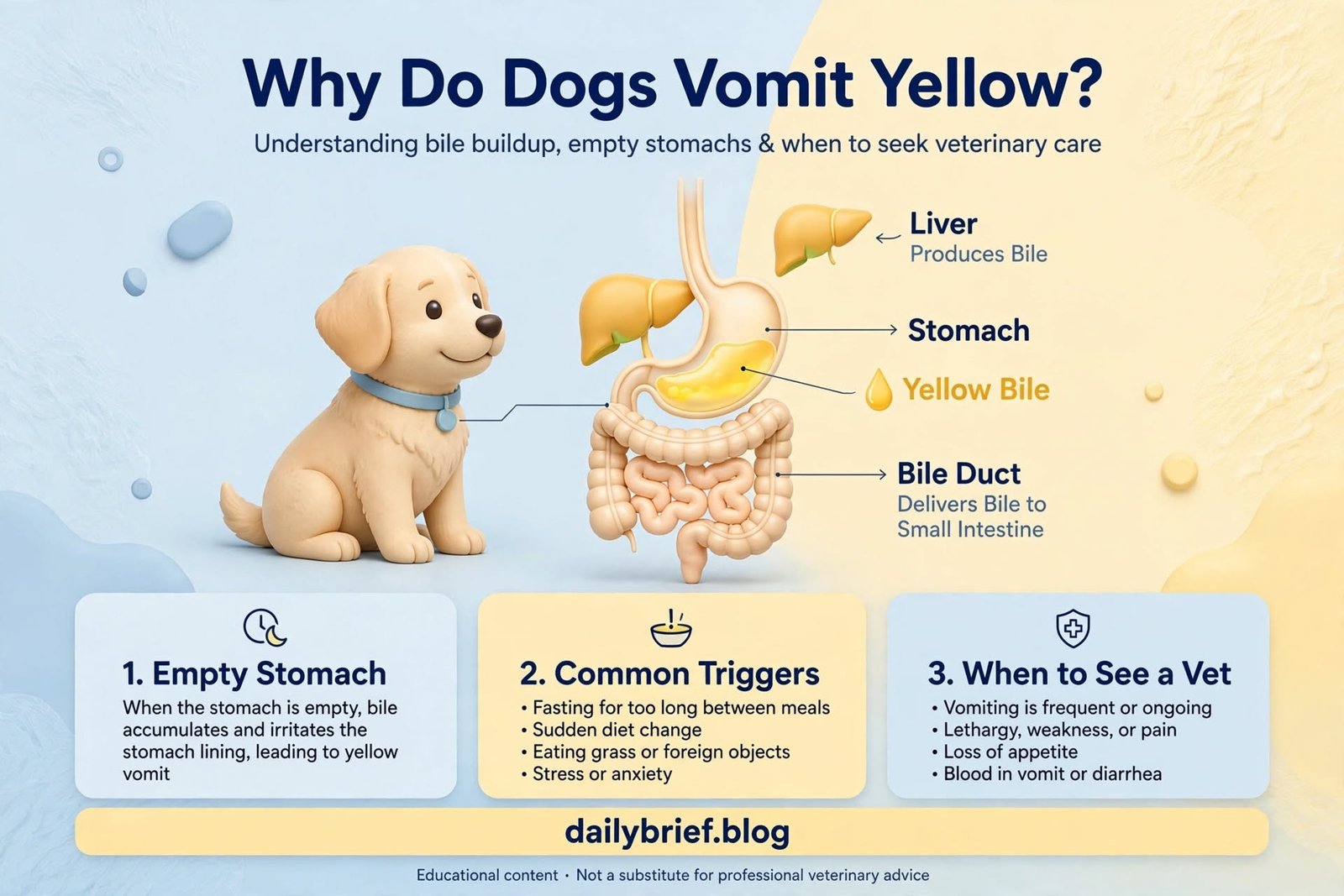
When a dog is spewing yellow material, the vomit often contains bile, a yellowish or greenish digestive fluid produced by the liver and stored in the gallbladder before being released into the small intestine.
Bile helps digest fats. When it enters the stomach, particularly when the stomach is empty or irritated, it may contribute to nausea and Dog Spewing Yellow.
Yellow vomit can appear in several forms:
- Yellow liquid: Thin fluid that may contain bile and stomach secretions.
- Yellow foam: Frothy material mixed with saliva and digestive fluids.
- Yellow fluid with food: Vomit containing partially digested food, bile, or other stomach contents.
- Yellow-green vomit: May contain bile, although color alone cannot establish the underlying cause.
The appearance provides useful clues, but it cannot confirm a diagnosis. A veterinarian must consider the dog’s age, medical history, eating habits, other symptoms, and the frequency of vomiting.
5. Why Is My Dog Spewing Yellow? Common Causes
Several conditions can explain why a dog throws up yellow liquid. Some are relatively mild, while others require prompt medical treatment.
1. An Empty Stomach
One common reason for yellow vomit is an empty stomach. This may happen when a dog goes many hours without eating, especially overnight.
Some dogs vomit yellow bile early in the morning but otherwise maintain their normal appetite, energy, and behavior. This pattern can be associated with bilious vomiting syndrome, a condition involving the movement of bile into the stomach. However, recurring morning vomiting should not automatically be attributed to this condition without veterinary assessment.
What may help: If a veterinarian determines that an empty stomach is responsible, adjusting the feeding schedule or offering a small bedtime meal may reduce episodes. The appropriate diet and meal schedule depend on your dog’s health and nutritional needs.
2. Eating Something Unsuitable
Dogs sometimes eat garbage, spoiled food, unfamiliar treats, grass, or objects they find around the house. These items may irritate the digestive system and trigger vomiting.
Dietary changes, food intolerance, and overeating can also upset a dog’s stomach. Vomiting may occur alongside reduced appetite, diarrhea, or abdominal discomfort.
Keep track of what your dog may have eaten. If you suspect that your pet swallowed a toy, bone, medication, chemical, or potentially toxic food, contact a veterinarian promptly rather than waiting for symptoms to worsen.
3. Gastritis or Digestive Irritation
Gastritis means inflammation of the stomach lining. It can develop after eating irritating substances, consuming unsuitable food, taking certain medications, or experiencing an infection or another illness.
Possible symptoms include:
- Yellow or foamy vomit.
- Reduced appetite.
- Nausea, drooling, or repeated swallowing.
- Abdominal discomfort.
- Diarrhea in some cases.
Mild digestive irritation may resolve, but persistent vomiting can cause dehydration and may signal a condition that needs treatment.
4. Pancreatitis
Pancreatitis is inflammation of the pancreas, an organ involved in digestion and blood sugar regulation. It can cause vomiting, abdominal pain, reduced appetite, and lethargy.
A dog with pancreatitis may vomit yellow bile, but the color itself does not identify this disease. Veterinary examination and appropriate testing are needed to distinguish pancreatitis from other causes.
Seek prompt veterinary advice if vomiting occurs alongside a painful abdomen, marked weakness, or a refusal to eat.
5. Intestinal Blockage
An intestinal blockage occurs when an object or other obstruction prevents material from moving normally through the digestive tract. Dogs may develop blockages after swallowing toys, fabric, bones, or other foreign objects.
Warning signs may include:
- Repeated vomiting.
- Loss of appetite.
- Abdominal pain or swelling.
- Reduced stool production or difficulty passing stool.
- Weakness or worsening lethargy.
An obstruction can become life-threatening. Do not attempt to treat suspected blockage with home remedies, extra food, laxatives, or induced vomiting. Seek urgent veterinary assessment.
6. Intestinal Parasites or Infections
Intestinal parasites and certain infections can cause digestive symptoms, including vomiting, diarrhea, appetite changes, and weakness.
Puppies and dogs with incomplete vaccinations may be particularly vulnerable to serious infectious illnesses, including canine parvovirus. If a puppy is vomiting repeatedly, especially with diarrhea or low energy, contact a veterinarian urgently.
7. Liver, Kidney, or Other Systemic Conditions
Vomiting is not always caused by a problem limited to the stomach or intestines. Conditions affecting the liver, kidneys, adrenal glands, and other body systems may also cause digestive symptoms.
Yellow vomit alone cannot establish whether an organ is functioning normally. If episodes recur or are accompanied by increased thirst, changes in urination, weight loss, or persistent appetite changes, arrange a veterinary examination.
6. Common Causes of Yellow Vomit at a Glance
| Possible cause | Clues you may notice | Recommended response |
|---|---|---|
| Empty stomach or possible bilious vomiting syndrome | Occasional early-morning vomiting; otherwise normal behavior | Discuss recurring episodes with a veterinarian; a feeding-schedule change may help if appropriate |
| Dietary indiscretion | Recent garbage, unfamiliar food, or treats | Contact a vet if vomiting persists or a dangerous item may have been swallowed |
| Gastritis | Vomiting, nausea, appetite changes, possible diarrhea | Seek veterinary advice if symptoms continue or worsen |
| Pancreatitis | Vomiting with abdominal pain or poor appetite | Prompt veterinary assessment |
| Intestinal blockage | Repeated vomiting, pain, possible foreign-object ingestion | Emergency veterinary care when obstruction is suspected |
| Infection or parasites | Vomiting with diarrhea, weakness, or other illness signs | Veterinary examination and appropriate testing |
| Organ-related disease | Recurrent vomiting with other changes in health | Veterinary examination and diagnostic testing |
These patterns are clues, not diagnostic rules. Several conditions can produce similar symptoms, and a veterinarian may need blood tests, stool tests, X-rays, or ultrasound to identify the cause.
7. When Is Dog Spewing Yellow an Emergency?
Not every isolated vomiting episode is an emergency. However, certain warning signs should never be ignored.
Seek emergency veterinary care immediately if your dog has:
- A swollen or visibly distended abdomen.
- Repeated dry heaving or attempts to vomit without producing material.
- Collapse, severe weakness, or difficulty breathing.
- Severe abdominal pain.
- Blood in the vomit, or dark material resembling coffee grounds.
- Suspected poisoning or swallowing of a dangerous foreign object.
Contact a veterinarian promptly if your dog:
- Vomits repeatedly or cannot keep water down.
- Develops diarrhea, especially bloody diarrhea.
- Becomes unusually sleepy or refuses food.
- Shows signs of dehydration, such as dry or sticky gums.
- Has recurring episodes, unexplained weight loss, or other persistent symptoms.
These signs can accompany serious digestive disease, obstruction, dehydration, or other emergencies. Puppies, elderly dogs, and dogs with existing medical conditions may need earlier assessment because they can deteriorate more quickly.
If your dog is vomiting repeatedly, do not wait for a specific number of episodes before contacting a veterinarian. The dog’s overall condition and accompanying symptoms matter as much as the frequency.
8. What Should You Do If Your Dog Is Spewing Yellow?

Your response should depend on whether your dog has vomited once and appears well or is showing signs of Dog Spewing Yellow.
Step 1: Check Your Dog’s Overall Condition
Observe your dog carefully after the episode. Check whether they are alert, walking normally, interested in their surroundings, and breathing comfortably.
Pay attention to any additional symptoms, including diarrhea, abdominal discomfort, unusual thirst, or loss of appetite.
If your dog appears severely unwell or has any emergency warning signs, seek veterinary care immediately rather than continuing to monitor at home.
Step 2: Offer Water Carefully
Vomiting can lead to fluid loss. If your dog is alert and vomiting has stopped, offer small amounts of fresh water frequently rather than allowing them to gulp a large amount at once.
If your dog vomits after drinking, cannot keep water down, or appears dehydrated, contact a veterinarian promptly. Do not force water into your dog’s mouth or withhold water for an extended period.
Step 3: Review Recent Meals and Possible Exposures
Think about what your dog ate during the previous 24 hours. Consider recent food changes, new treats, access to rubbish, medications, plants, chemicals, and small objects.
If poisoning or foreign-object ingestion is possible, contact a veterinarian immediately. Do not wait for vomiting to stop or attempt to induce further vomiting unless a veterinary professional specifically directs you to do so.
Step 4: Ask About Appropriate Feeding
If your dog vomited only once, is otherwise acting normally, and has no warning signs, ask your veterinarian whether a small meal is appropriate once the stomach has settled.
For dogs that consistently vomit yellow bile early in the morning, a veterinarian may recommend smaller, more frequent meals or a bedtime snack after considering other possible causes.
Avoid making substantial dietary changes while your dog is actively vomiting or appears unwell.
Step 5: Record the Symptoms
Keep a simple record of the episode. This information can help your veterinarian identify patterns and decide which tests may be necessary.
Record:
- The time the vomiting occurred.
- The color and consistency of the material.
- Whether food was present.
- How many times your dog vomited.
- Recent meals, treats, and possible exposures.
- Changes in appetite, energy, stool, or water intake.
A photograph of the vomit may also be helpful.
9. Can You Treat Dog Spewing Yellow at Home?
Home monitoring may be reasonable for a single mild episode in an otherwise healthy adult dog that quickly returns to normal. However, home care is not a substitute for veterinary treatment when vomiting persists or other symptoms appear.
The following comparison can help you decide what to do.
| Situation | Appropriate action |
|---|---|
| One isolated episode; dog is alert and behaving normally | Monitor closely and seek veterinary advice if symptoms recur |
| Occasional early-morning bile vomiting | Arrange a veterinary assessment, particularly if it becomes a pattern |
| Repeated vomiting or inability to keep water down | Contact a veterinarian promptly |
| Vomiting with pain, marked weakness, or bloody diarrhea | Seek urgent veterinary care |
| Bloated abdomen and repeated unsuccessful retching | Go to an emergency veterinary clinic immediately |
| Possible toxin or foreign-object ingestion | Seek immediate professional guidance |
Should You Give Your Dog Human Medicine?
No. Do not give human anti-nausea medicines, antacids, painkillers, or other medications without veterinary guidance.
A medicine that is appropriate for people may be unsuitable for dogs, interact with existing treatments, or delay diagnosis of an underlying condition. A veterinarian can determine whether medication is needed and select an appropriate treatment.
Likewise, do not use home remedies to induce vomiting or treat a suspected blockage.
10. How Can You Help Prevent Dog Spewing Yellow?

Although not every cause can be prevented, several habits may reduce the risk of digestive upset and help you recognize problems earlier.
Maintain a Consistent Feeding Schedule
Feed your dog at regular times using an appropriate, balanced diet. If your veterinarian suspects that long gaps between meals contribute to morning vomiting, ask whether smaller meals or a bedtime snack would be suitable.
Do not assume that feeding changes alone will resolve recurring symptoms.
Introduce New Foods Gradually
Sudden dietary changes may upset some dogs’ digestive systems. When changing food, ask your veterinarian how to transition safely, especially if your dog has a history of digestive problems.
Avoid excessive treats, table scraps, and unfamiliar foods that may be unsuitable for dogs.
Prevent Access to Dangerous Items
Keep rubbish bins secured and store medications, cleaning products, chemicals, and potentially toxic foods out of reach. Put away toys and objects that could be swallowed.
If your dog is a habitual scavenger, supervise outdoor activities and use appropriate training to reduce access to unsafe items.
Keep Up With Preventive Veterinary Care
Routine examinations, appropriate vaccinations, parasite prevention, and a balanced diet support your dog’s overall health.
Discuss recurring vomiting with your veterinarian even when your dog appears normal between episodes. A repeated pattern may be an important clue to an underlying digestive or systemic condition.
11. Yellow Vomit vs. Other Types of Dog Vomit
The appearance of vomit can provide clues, but it cannot reliably identify a disease on its own.
| Appearance | Possible explanation | What to consider |
|---|---|---|
| Yellow liquid | Bile mixed with digestive fluids | May occur with an empty stomach or gastrointestinal illness |
| Yellow foam | Bile, saliva, and other fluids | Consider timing, frequency, and other symptoms |
| White foam | Saliva and stomach fluid; several possible causes | Persistent symptoms or dry heaving need assessment |
| Undigested food | Regurgitation, eating quickly, or digestive problems | Consider how soon it occurred after eating and whether there was retching |
| Bright red blood | Possible bleeding in the digestive tract or mouth | Seek urgent veterinary advice |
| Dark, coffee-ground-like material | Possible digested blood | Seek urgent veterinary assessment |
| Vomit containing foreign material | Possible ingestion of an object | Contact a veterinarian, especially if the object may cause an obstruction |
The Merck Veterinary Manual and the American Kennel Club explain that vomit appearance must be interpreted alongside the dog’s clinical signs and history.
12. Frequently Asked Questions
1. Why is my dog spewing yellow liquid?
Yellow liquid often contains bile, a digestive fluid that can enter the stomach when it is empty. However, gastritis, dietary problems, intestinal obstruction, pancreatitis, and other illnesses may also cause yellow vomiting. Repeated episodes or additional symptoms warrant veterinary assessment.
2. Why does my dog throw up yellow bile in the morning?
Some dogs vomit yellow bile after going many hours without food overnight. This pattern can be associated with bilious vomiting syndrome. A veterinarian should assess recurring episodes before you assume an empty stomach is the cause.
3. Is yellow vomit dangerous for dogs?
Not always. A single episode in an otherwise healthy adult dog may be relatively mild. Nevertheless, yellow vomit can accompany serious illnesses. Repeated vomiting, abdominal pain, weakness, blood, or an inability to keep water down requires prompt veterinary attention.
4. What should I feed my dog after vomiting yellow bile?
Once vomiting has stopped, a veterinarian may recommend offering a small amount of easily digested food if your dog is otherwise well. The appropriate food and timing depend on your dog’s age, health, and symptoms. Avoid forcing food or feeding a dog that continues to vomit.
5. Should I worry if my dog throws up yellow foam but acts normally?
One isolated episode may not indicate an emergency if your dog is otherwise healthy and behaving normally. Monitor closely, but contact your veterinarian if vomiting returns, your dog’s appetite changes, or other symptoms develop.
6. Can an empty stomach cause a dog to vomit yellow bile?
Yes. Yellow bile vomiting can occur when a dog has gone a long time without eating. If a veterinarian suspects this pattern, adjusting meal timing may help. However, other causes should be considered when vomiting is frequent or accompanied by illness.
7. When should I take my dog to the vet for yellow vomiting?
Seek emergency care for a swollen abdomen, repeated unsuccessful retching, collapse, severe pain, or suspected poisoning. Contact a veterinarian promptly for repeated vomiting, bloody diarrhea, unusual weakness, dehydration, or an inability to keep water down.
8. Can I give my dog medicine to stop yellow vomiting?
Do not administer human medicines or leftover veterinary medication without professional guidance. Suppressing vomiting without identifying its cause may delay necessary treatment. Your veterinarian can determine whether medication or diagnostic testing is appropriate.
13. Conclusion
When your dog is spewing yellow, the material often contains bile, which may appear when the stomach is empty. Although occasional vomiting can be mild, yellow vomit can also signal digestive irritation, pancreatitis, intestinal obstruction, or another health problem.
Observe your dog’s behavior, offer water carefully when appropriate, and avoid unapproved medications or home remedies. If vomiting repeats, your dog appears unwell, or emergency warning signs develop, seek veterinary care without delay.
For recurring early-morning episodes, consult a veterinarian about possible causes and whether a feeding-schedule adjustment could help. The safest approach is to consider the whole picture rather than relying on vomit color alone.