Understanding IPAL Komunal ABR Technology
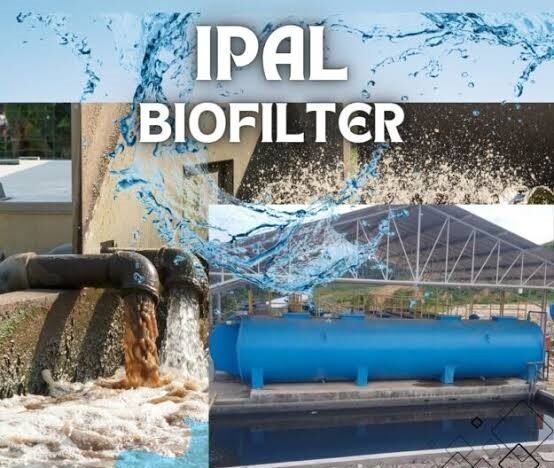
IPAL komunal ABR technology combines communal wastewater infrastructure with an Anaerobic Baffled Reactor (ABR) to treat wastewater produced by multiple households or users. It is designed to provide a shared solution for communities that need better wastewater management without relying entirely on complex mechanical treatment equipment.
The concept is straightforward: wastewater from connected buildings is collected through a communal sewer network and directed to a treatment facility. Inside the ABR, wastewater passes through several chambers where naturally occurring microorganisms break down a significant portion of the organic matter.
This approach makes ABR particularly interesting for decentralized wastewater treatment. However, successful treatment depends on much more than the reactor itself. Proper sizing, hydraulic design, operation, maintenance, user behavior, and final effluent requirements all influence the result.
What Does ABR Mean in an IPAL Komunal System?
ABR stands for Anaerobic Baffled Reactor. “Anaerobic” means the biological treatment process takes place without the continuous presence of dissolved oxygen, while “baffled reactor” describes the internal arrangement that directs wastewater through multiple treatment compartments.
An IPAL komunal, meanwhile, is a communal wastewater treatment installation intended to serve multiple users. Combining the two creates a treatment system where wastewater can receive biological treatment without requiring continuous aeration throughout the main reactor.
The baffles are especially important. Rather than allowing wastewater to move directly from the inlet to the outlet, they create a longer and more controlled flow path. This increases contact between wastewater and the microorganisms responsible for biological degradation.
How IPAL Komunal ABR Technology Treats Wastewater
The treatment process begins before wastewater reaches the ABR chambers. Large solids, plastics, and other unwanted materials should ideally be intercepted during preliminary treatment.
Once wastewater enters the reactor, the baffled configuration causes it to move through successive compartments. Depending on the design, wastewater generally moves upward through one section and then downward through another.
This repeated movement provides several benefits. Solids can settle, organic matter can interact with anaerobic biomass, and microorganisms can progressively break down biodegradable pollutants.
A typical process can be summarized as:
- Collection: Wastewater from households or community facilities enters the communal sewer system.
- Preliminary treatment: Screening and settling help remove larger solids.
- ABR treatment: Wastewater passes through several anaerobic chambers.
- Secondary or polishing treatment: Additional units can improve the removal of remaining pollutants.
- Final treatment: Disinfection or other processes may be included when required.
- Effluent management: Treated water is discharged or reused according to applicable requirements.
This sequence can vary significantly between projects. There is no single ABR configuration that is appropriate for every community.
Why Communities Consider ABR Technology
One major attraction of IPAL komunal ABR technology is its relatively low dependence on mechanical aeration. Conventional biological treatment frequently requires equipment to transfer oxygen into wastewater, while the primary ABR process relies on anaerobic microorganisms.
That difference can influence energy consumption and operational complexity. For communities where electricity supply, technical resources, or long-term operating budgets are limited, a simpler treatment process may be attractive.
Another benefit is the possibility of constructing the reactor underground. This can be useful where land is limited or where the community wants to maintain usable space above the treatment structure.
Main Benefits of ABR
- Relatively simple biological treatment
- Low requirement for continuous aeration
- Potentially lower energy consumption
- Suitable for decentralized wastewater management
- Can serve multiple households through shared infrastructure
- Can be combined with other treatment technologies
- Underground construction may reduce land-use conflicts
- Relatively straightforward treatment principle
These advantages explain why ABR is often considered for domestic wastewater applications, particularly where a community-scale approach is more practical than individual treatment systems.
IPAL Komunal ABR Technology and Treatment Efficiency
The effectiveness of an ABR system should never be judged simply by its design name. Two systems using the same basic technology can produce different results because their influent characteristics, hydraulic loads, reactor dimensions, operating conditions, and maintenance practices may differ.
BOD and COD are commonly considered when assessing organic pollution. A properly functioning anaerobic reactor can reduce a substantial portion of biodegradable organic matter, but the remaining concentration may still require additional treatment.
Suspended solids can also present a challenge. If solids are not adequately removed during earlier stages or become disturbed inside the reactor, effluent quality can deteriorate.
For this reason, IPAL komunal ABR technology is often best understood as one component of a treatment train, rather than a guarantee that every wastewater parameter will automatically meet the required discharge standard.
What Should Be Considered When Designing an ABR?
Good design begins with the wastewater and the people who will use the system—not with the tank dimensions.
The expected number of users is one of the first considerations. Designers need to estimate current demand and consider reasonable future changes in population or connections.
1. Wastewater Flow
Average flow provides an important starting point, but peak flow should also be considered. Sudden increases in wastewater entering the plant can affect hydraulic performance if the system has not been designed appropriately.
2. Organic Loading
The concentration and quantity of organic material entering the plant influence biological treatment. BOD and COD data can help engineers establish an appropriate design basis.
3. Hydraulic Retention Time
Wastewater needs enough time inside the reactor for biological and physical treatment processes to occur. An incorrectly sized reactor may allow wastewater to pass through too quickly.
4. Number of Compartments
The internal baffling arrangement affects wastewater movement and contact with anaerobic biomass. The number and configuration of chambers should therefore be determined through engineering calculations rather than arbitrary construction preferences.
5. Site Conditions
Available land, groundwater conditions, soil characteristics, accessibility, elevation, and the location of the receiving environment can all influence the final layout.
What Happens After the ABR?
A common misconception about IPAL komunal ABR technology is that wastewater can always be discharged directly after leaving the final ABR chamber.
The appropriate downstream process depends on the required effluent quality. Some systems may incorporate anaerobic filters, constructed wetlands, aerobic polishing, filtration, sedimentation, or disinfection.
The purpose of polishing is to address pollutants that remain after primary anaerobic treatment. For example, additional treatment may be needed for suspended solids, pathogens, nutrients, or residual organic matter.
This is one of the most important planning principles: the treatment objective should determine the process configuration.
Maintenance: The Part That Determines Long-Term Success
Even a well-designed IPAL can become ineffective when routine maintenance is ignored.
Operators should regularly inspect the inlet, pipes, chambers, access points, and downstream treatment units. Sludge accumulation should also be monitored because excessive solids can reduce the effective treatment volume.
Communities should establish clear responsibility for operation and maintenance before the system is constructed. Someone needs to know who will perform inspections, arrange desludging, respond to blockages, monitor performance, and manage operating costs.
User education is equally important. A communal sewer is not designed to receive every material that can be flushed or poured down a drain.
Materials Users Should Avoid
- Plastics and packaging
- Sanitary products
- Disposable wipes
- Cooking grease and excessive oils
- Harsh chemicals
- Construction materials
- Other non-biodegradable solid waste
Preventing these materials from entering the system is usually easier and cheaper than dealing with repeated blockages or damaged treatment equipment.
Common Problems With Communal ABR Systems
Several recurring problems can reduce the performance of IPAL komunal ABR technology.
Poor hydraulic design can cause short-circuiting, excessive flow velocity, or inadequate retention time. Insufficient maintenance can lead to sludge accumulation and blockages. Improper user behavior can introduce materials that interfere with treatment.
Another issue is expecting the ABR to solve every wastewater problem without considering downstream treatment. If the discharge requirements are strict, the complete treatment train must be designed around those requirements.
Finally, communities sometimes focus heavily on construction while overlooking long-term management. A treatment plant is an operating asset, not simply a completed infrastructure project.
ABR Compared With Aerobic Treatment
| Feature | ABR | Aerobic System |
|---|---|---|
| Main biological environment | Anaerobic | Aerobic |
| Continuous aeration | Generally not required in the ABR | Commonly required |
| Energy demand | Potentially lower | Often higher |
| Mechanical equipment | Relatively limited | Usually greater |
| Sludge management | Still required | Still required |
| Additional polishing | May be necessary | Depends on design |
| Community application | Often suitable | Also suitable, depending on conditions |
| Neither technology is automatically superior. The right choice depends on the project’s objectives, wastewater characteristics, available land, electricity supply, budget, technical expertise, and environmental requirements. |
Is IPAL Komunal ABR Technology Right for Every Community?
No. ABR should be selected after considering the complete wastewater management situation.
It can be attractive for communities seeking a relatively simple anaerobic treatment process, particularly where energy consumption and mechanical complexity need to be controlled. It may also work well when there is sufficient space for appropriate preliminary and polishing treatment.
However, projects with demanding nutrient-removal requirements, unusual industrial wastewater, highly variable flows, or other specialized conditions may require a different treatment configuration.
A site-specific assessment is therefore essential before construction begins.
Final Thoughts on IPAL Komunal ABR Technology
IPAL komunal ABR technology offers a practical way to combine communal wastewater collection with anaerobic biological treatment. Its baffled reactor design creates multiple treatment stages inside a relatively compact structure while reducing the need for continuous aeration.
Its real value, however, comes from proper system planning. Engineers must account for wastewater flow, organic loading, retention time, site conditions, discharge requirements, and future users. Communities must then maintain the system and ensure that users understand how to protect the sewer network.
The most effective approach is to view IPAL komunal ABR technology as a complete wastewater management system, not simply as an ABR tank. When design, operation, maintenance, monitoring, and community participation work together, the technology can provide a practical foundation for more responsible and sustainable communal wastewater treatment.