
Introduction
Lolita fashion is a distinctive Japanese street-fashion style known for its elegant dresses, decorative lace, puffed sleeves, ribbons, elaborate headpieces, and voluminous skirts. Inspired by historical European clothing, doll-like aesthetics, and Japan’s kawaii culture, it combines intricate details with carefully coordinated outfits. Although the name can be confusing to people unfamiliar with Japanese fashion, Lolita fashion has developed its own identity as a creative and expressive subculture.
The style became visible in Japan during the late 20th century, particularly through the street-fashion scene in Tokyo’s Harajuku district. Over time, it expanded into an international community with different aesthetics, including Sweet Lolita, Gothic Lolita, and Classic Lolita. Each variation interprets the style differently, from pastel colors and playful prints to dark romantic designs and vintage-inspired elegance. The Victoria and Albert Museum and academic researchers recognize Lolita fashion as a distinct cultural and stylistic movement rather than simply a way of dressing up as a fictional character.
Understanding Lolita fashion means looking beyond its recognizable dresses. Its history, clothing construction, accessories, styling traditions, and community all help explain its appeal. This guide explores the main Lolita fashion styles, essential wardrobe pieces, Japanese cultural influences, and practical ways to begin building an outfit of your own.
What Is Lolita Fashion?
Lolita fashion is a Japanese street-fashion subculture characterized by coordinated outfits, elaborate dresses, modest silhouettes, and decorative details. Common elements include lace-trimmed blouses, knee-length or longer bell-shaped skirts, petticoats, bows, stockings, and carefully selected shoes.
Rather than following ordinary everyday fashion trends, Lolita fashion draws on historical European aesthetics, particularly Rococo and Victorian styles, while incorporating Japanese interpretations of cuteness, elegance, and individuality. The result is a distinctive look that can appear romantic, playful, dramatic, or vintage-inspired, depending on the chosen style.
The term is also associated with a community of people who appreciate the clothing, coordinate outfits, share styling ideas, and participate in fashion meetups. For many enthusiasts, wearing Lolita fashion is a way to express personal identity rather than follow conventional expectations about how they should dress. Academic research has examined this subculture as a form of self-expression and an alternative approach to mainstream fashion.
Key Characteristics of Lolita Clothing
Several features help distinguish Lolita fashion from other alternative styles.
- Structured silhouettes: Skirts typically create a full bell-shaped or A-line outline, often with the help of a petticoat.
- Decorative details: Lace, ruffles, ribbons, bows, embroidery, and carefully placed trims are common.
- Coordinated accessories: Headbands, bonnets, stockings, bags, and shoes complement the main outfit.
- Distinctive fabrics and prints: Materials may feature florals, bows, sweets, architectural motifs, or darker ornamental patterns.
- Intentional styling: Colors, proportions, accessories, and hairstyles are usually chosen to work together.
Not every outfit includes all these elements. Different Lolita substyles favor different silhouettes, colors, materials, and levels of decoration.
A Brief History of Lolita Fashion in Japan
Lolita fashion developed as part of Japan’s evolving street-fashion culture during the 1980s and 1990s. Its origins are sometimes dated differently in historical accounts, partly because the style developed gradually rather than beginning with a single designer or event. The Victoria and Albert Museum describes its emergence as a Japanese street style during the 1990s, while academic research traces its development to the preceding decade.
Tokyo’s Harajuku district became an important setting for experimental youth fashion. Its street-fashion culture provided space for people to explore looks that differed from mainstream clothing, combining international influences with Japanese popular culture.
Lolita fashion developed within this broader environment. Rather than copying historical European clothing exactly, enthusiasts reinterpreted its silhouettes and decorative elements through modern Japanese design, distinctive prints, and carefully coordinated accessories.
European historical influences
Two important influences are Rococo and Victorian fashion.
Rococo developed in eighteenth-century Europe and is associated with elaborate decoration, ornamental details, and luxurious visual arrangements. Victorian-era clothing provides another reference point through high collars, sleeves, layered garments, and refined silhouettes.
Lolita designers adapt selected elements from these historical traditions into wearable contemporary outfits. The finished look is therefore a modern Japanese interpretation of historical aesthetics, not simply a reproduction of an antique dress.
The role of music and popular culture
Japanese visual-kei music, associated with elaborate stage costumes and influences from glam rock, metal, and punk, also helped shape the development of Gothic and other dramatic Lolita looks. Fans incorporated aspects of musicians’ clothing and stage aesthetics into their own fashion choices.
Fashion magazines, photographs, and later online communities helped enthusiasts discover new designs and connect with other people interested in the style. The 2004 Japanese film Kamikaze Girls (Shimotsuma Monogatari) also helped bring Lolita fashion to a broader audience, as discussed in Japan’s official English-language cultural publication.
Today, Lolita fashion exists beyond its original Japanese setting. International enthusiasts adapt it to their local communities, clothing markets, and personal preferences while continuing to draw on the style’s recognizable foundations. Research published in 2026 examines the broader transformation of Japanese kawaii culture and Lolita fashion from subculture to global culture.
The Main Types of Lolita Fashion
Lolita fashion includes several recognizable substyles. Understanding the differences makes it easier to select clothing that matches your preferred colors, mood, and level of formality.
Lolita fashion styles at a glance
| Style | Common colors | Overall aesthetic | Typical details |
|---|---|---|---|
| Sweet Lolita | Pastels, cream, pink | Playful and cute | Sweets prints, bows, ribbons |
| Gothic Lolita | Black, burgundy, navy | Dark and romantic | Lace, ornate motifs, dramatic accessories |
| Classic Lolita | Earth tones, cream, muted colors | Vintage and elegant | Florals, restrained prints, refined shapes |
| Punk Lolita | Black, red, plaid | Rebellious and edgy | Buckles, straps, plaid, boots |
| Country Lolita | Natural tones, gingham, florals | Rustic and whimsical | Straw hats, baskets, floral prints |
Essential Clothing Pieces in a Lolita Outfit
A coordinated Lolita outfit is often called a coord, short for coordination. It refers to the way the dress, accessories, shoes, and other elements are assembled into one complete look.
You do not need to own a large wardrobe to create a coord. A few well-chosen items that work together can make a more cohesive outfit than many unrelated pieces.
The dress: OP and JSK styles
Two useful dress terms are:
- OP (one-piece dress): A dress designed with its own attached sleeves, although sleeve lengths and necklines vary.
- JSK (jumper skirt): A sleeveless dress-style garment generally worn over a blouse or another suitable top.
A skirt-and-blouse outfit is another option. The best choice depends on the weather, the desired silhouette, personal comfort, and the designs available.
Petticoats and bloomers
A petticoat worn beneath a skirt provides volume and helps create the characteristic rounded or bell-shaped silhouette. Different petticoats produce different shapes, so consider the skirt’s cut and the manufacturer’s guidance when selecting one.
Bloomers are optional undergarments that some people wear beneath skirts for extra coverage and comfort. They are not essential to every outfit.
Blouses, socks, and tights
Blouses can add collars, cuffs, sleeves, and lace details to a coord, particularly when worn under a JSK. Socks and tights help balance the lower half of the outfit and can connect the shoes to the dress through color or design.
For a coordinated result, consider the overall proportions. A heavily decorated dress might work well with simpler socks, while a plain dress can provide room for patterned tights or more distinctive accessories.
Shoes and headwear
Mary Jane shoes, low heels, lace-up shoes, and boots can all work, depending on the substyle. Headwear may include bows, bonnets, headbands, mini-hats, and other decorative pieces.
Accessories are most effective when they complement the outfit instead of competing with every other element. Choose a clear focal point, such as a printed dress or an elaborate bonnet, and build around it.
How to Style Your First Lolita Outfit
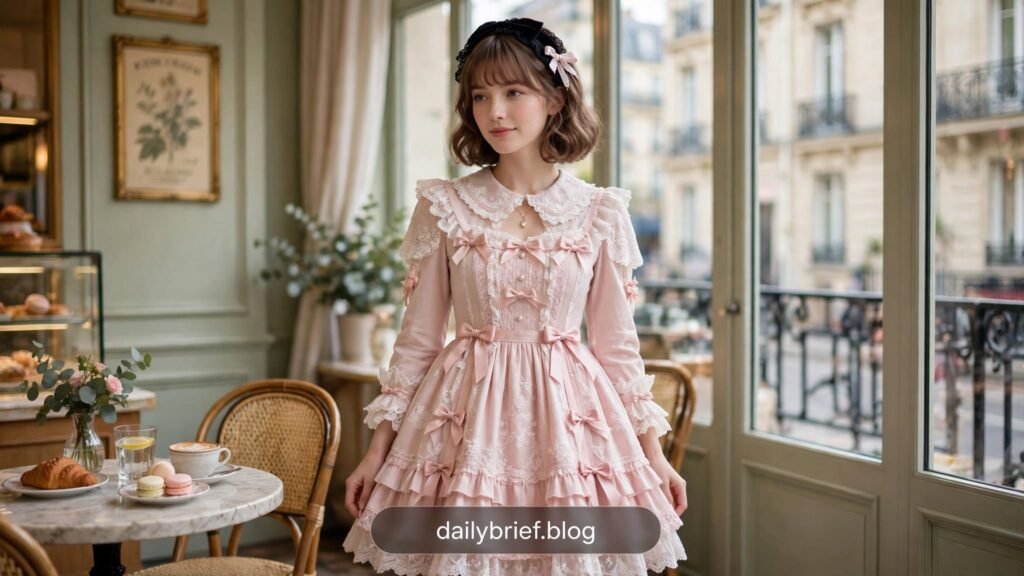
Creating a first coord can feel complicated because Lolita fashion has many specialized garments and styling conventions. Starting with a simple plan makes the process easier.
Step 1: Choose one substyle
Decide whether you prefer Sweet, Gothic, Classic, Punk, or Country Lolita. Save reference images that appeal to you and look for common colors, silhouettes, and accessories.
Step 2: Select the main garment
Choose a dress or skirt that fits your intended style and budget. Check the size chart, garment measurements, fabric composition, and care instructions before purchasing.
Step 3: Build a complementary color palette
Use the main garment as your starting point. A coord might use a printed Sweet Lolita dress with cream socks and matching hair accessories, or a Gothic dress with black shoes and restrained silver-toned jewelry.
Matching every item exactly is not necessary. A consistent palette and a few repeated details can make the outfit feel unified.
Step 4: Add the appropriate silhouette
Consider whether the skirt needs a petticoat and whether the chosen shape suits the dress. A petticoat that is too large or too small for the skirt can change its intended proportions.
Step 5: Complete the outfit with accessories
Choose shoes, socks, a bag, and headwear that fit the look. Avoid buying every possible accessory at once; a smaller number of compatible pieces gives you more flexibility as your style develops.
Example of a beginner coord
| Item | Example choice |
|---|---|
| Main garment | Cream-and-pink printed JSK |
| Top | Plain cream blouse |
| Petticoat | Volume suited to the skirt |
| Socks | Cream knee-high socks |
| Shoes | Pink or cream Mary Janes |
| Headwear | A simple bow or matching headband |
| Bag | A small bag in a complementary color |
This example is a suggested combination rather than a strict formula. The right outfit is one that suits your preferences, fits comfortably, and achieves the look you want.
Lolita Fashion and Japanese Kawaii Culture
The Japanese concept of kawaii, often translated as “cute,” is an important part of understanding the visual language of Lolita fashion. However, Lolita fashion is not simply a collection of cute clothes. It combines decorative design, historical references, a distinctive silhouette, and a subcultural approach to personal expression. Research on its cultural development explores how participants create identities and meanings through the way they wear and coordinate clothing.
A different approach to self-expression
Mainstream fashion changes frequently with commercial trends and social expectations. Lolita fashion gives enthusiasts another way to approach clothing by focusing on a recognizable aesthetic, detailed coordination, and personal preference.
For some wearers, the clothing provides a sense of confidence, creativity, or belonging. Others appreciate the craftsmanship, historical references, or opportunity to explore a particular visual identity. Not everyone who wears Lolita fashion shares the same motivations, and it is best to avoid assuming a single meaning for every participant.
Is Lolita fashion a form of cosplay?
Lolita fashion is generally considered a street-fashion style and subculture, rather than cosplay. Cosplay typically involves dressing as a particular fictional character or recognizable media persona, whereas Lolita clothing uses a broader set of design conventions to create an independent fashion look. The Victoria and Albert Museum explicitly distinguishes Lolita fashion from dressing up as anime or manga characters.
A person may enjoy both fashion and cosplay, and the two can occasionally overlap. Nevertheless, an outfit does not have to depict a character to qualify as Lolita fashion.
Why the word can be misunderstood
In Western popular culture, the word “Lolita” is strongly associated with Vladimir Nabokov’s novel of the same name. That association can lead to confusion when people encounter the Japanese fashion style for the first time.
The fashion subculture uses the term in a different cultural and stylistic context, emphasizing clothing aesthetics such as elegance, cuteness, and elaborate historical influences. Researchers have specifically studied how the meaning of the word differs between Japanese and Western cultural contexts.
It is therefore important not to assume that the fashion style shares the novel’s themes or intentions simply because the same word is used. Understanding the distinction helps explain the fashion’s identity without overlooking the term’s different interpretations around the world.
Is Lolita Fashion Still Relevant Today?

Lolita fashion has developed beyond its original Japanese street-fashion setting and has attracted enthusiasts in different countries. Its continued presence in academic research, fashion writing, and dedicated communities reflects its significance as more than a brief clothing trend. Research published in 2026 specifically considers how Lolita fashion and Japanese kawaii culture have evolved from subcultures into broader global cultural phenomena.
Online communities make it easier for enthusiasts to share outfit photographs, discuss garment construction, learn specialist terminology, and discover brands or secondhand clothing. In-person meetups can also bring people together around shared interests in fashion, photography, tea gatherings, and related activities.
However, broad cultural interest should not be confused with evidence that the style is equally popular everywhere. Its visibility varies by country, community, and platform. The more useful takeaway is that Lolita fashion remains a recognizable, evolving style with a community extending beyond Japan.
Practical Advice for Beginners
Starting with Lolita fashion is easier when you focus on fit, comfort, coordination, and your own preferred aesthetic instead of trying to purchase a complete wardrobe immediately.
How to Build a Lolita Wardrobe on a Budget
Lolita clothing can require a larger investment than ordinary everyday clothing because of specialized construction, detailed fabrics, and accessories. However, you do not need to buy expensive branded pieces to begin exploring the style.
Consider these approaches:
- Start with one complete outfit. Choose a dress or skirt, a suitable petticoat if needed, comfortable shoes, and a few accessories.
- Explore secondhand clothing. Pre-owned garments can offer access to established designs at different price points. Check measurements, condition, and seller reviews carefully.
- Choose versatile pieces. A blouse, pair of shoes, or neutral accessories may work with several outfits.
- Learn basic garment care. Follow washing instructions, protect delicate lace, and store structured garments to help maintain their shape.
- Prioritize fit over labels. A garment that fits well and creates the intended silhouette is more useful than an expensive item that does not suit your measurements.
When buying from unfamiliar online sellers, examine product photographs, return policies, shipping costs, and garment measurements. A dress that looks suitable in a photograph may have a different fabric, silhouette, or finish in person.
Common Lolita Fashion Mistakes to Avoid
| Common mistake | How to improve |
|---|---|
| Buying an unsuitable petticoat | Match its shape and volume to the skirt. |
| Mixing too many competing prints | Establish a main print or focal point first. |
| Ignoring garment measurements | Compare the seller’s size chart with your own measurements. |
| Treating all Lolita styles as identical | Learn the visual differences between major substyles. |
| Buying accessories before choosing the main garment | Build the coord around a dress or skirt you already like. |
| Assuming Lolita fashion is cosplay | Approach it as a fashion style with its own conventions. |
| Ignoring weather and comfort | Select suitable layers, footwear, and fabrics for the occasion. |
These are useful guidelines rather than universal rules. Experienced enthusiasts often experiment with styling, and personal interpretation is part of what keeps the fashion evolving.
Lolita Fashion Etiquette and Community
Respectful participation matters just as much as clothing choices. Lolita fashion communities may have different traditions and preferences, so taking time to understand the group you are joining can make the experience more welcoming.
Keep these principles in mind:
- Ask permission before photographing other people, particularly at meetups or fashion events.
- Treat other people’s outfits as personal expressions rather than costumes to ridicule or debate.
- Be respectful when asking questions about brands, sizing, styling, or garment construction.
- Follow the event organizer’s guidelines when attending meetups.
- Remember that there is no single correct reason to enjoy the fashion.
Online discussions and local events can be helpful places to learn specialist terms, discover secondhand buying options, and exchange styling ideas. Communities are not all identical, so approach unfamiliar spaces with curiosity rather than assuming that every group follows the same expectations.
5. Frequently Asked Questions About Lolita Fashion
1. What is Lolita fashion?
Lolita fashion is a Japanese street-fashion style characterized by elaborate dresses, full skirts, lace, ribbons, coordinated accessories, and influences from historical European clothing. It is also a subculture associated with personal expression and distinctive outfit coordination.
2. Why is it called Lolita fashion?
The style uses the term “Lolita,” which has different associations in different cultural contexts. In Japanese fashion, it identifies a distinctive aesthetic associated with elegance, cuteness, and elaborate clothing. The name’s association with Vladimir Nabokov’s novel can cause misunderstandings, but the fashion has its own identity and history.
3. What are the main types of Lolita fashion?
The best-known types include Sweet Lolita, Gothic Lolita, and Classic Lolita. Other variations include Punk Lolita and Country Lolita. They differ in colors, prints, accessories, and overall mood.
4. Is Lolita fashion the same as cosplay?
No. Lolita fashion is generally an independent street-fashion style, while cosplay usually involves portraying a specific fictional character or recognizable media identity. Some people enjoy both, but wearing Lolita clothing does not require dressing as a character.
5. Can beginners wear Lolita fashion?
Yes. Beginners can start with a simple coordinated outfit and gradually learn about silhouettes, clothing terms, and accessories. Choosing a style you genuinely enjoy and checking garment measurements are useful first steps.
6. What do you need for a Lolita outfit?
A dress or skirt is usually the starting point. Depending on its design, you might add a blouse, petticoat, socks or tights, suitable shoes, and headwear. Not every outfit requires every piece.
7. Is Lolita fashion still popular?
Lolita fashion continues to exist as a Japanese street-fashion subculture with international communities. Its visibility differs across locations and platforms, but research continues to examine its global cultural development.
8. Where can you buy Lolita clothing?
You can look for Lolita clothing through specialist fashion brands, reputable online retailers, secondhand marketplaces, and community resale groups. Before ordering, review the seller’s reputation, measurements, material descriptions, shipping costs, and return policy.
6. Conclusion
Lolita fashion is much more than a collection of frilly dresses. It is a distinctive Japanese street-fashion movement shaped by historical European aesthetics, kawaii culture, creative coordination, and personal expression. Sweet, Gothic, Classic, Punk, and Country Lolita each offer different ways to explore its recognizable silhouettes and decorative details.
For beginners, the best approach is to choose a style that reflects personal taste, understand the essential clothing pieces, and build a coordinated outfit gradually. Fit, comfort, and thoughtful styling matter more than purchasing an expensive wardrobe all at once.
Understanding the cultural background also helps explain why Lolita fashion should be appreciated as its own fashion subculture rather than confused with unrelated meanings of the word. Whether you are researching Japanese street style or planning your first coord, learning about Lolita fashion is a useful starting point for exploring one of Japan’s distinctive contributions to contemporary fashion culture.