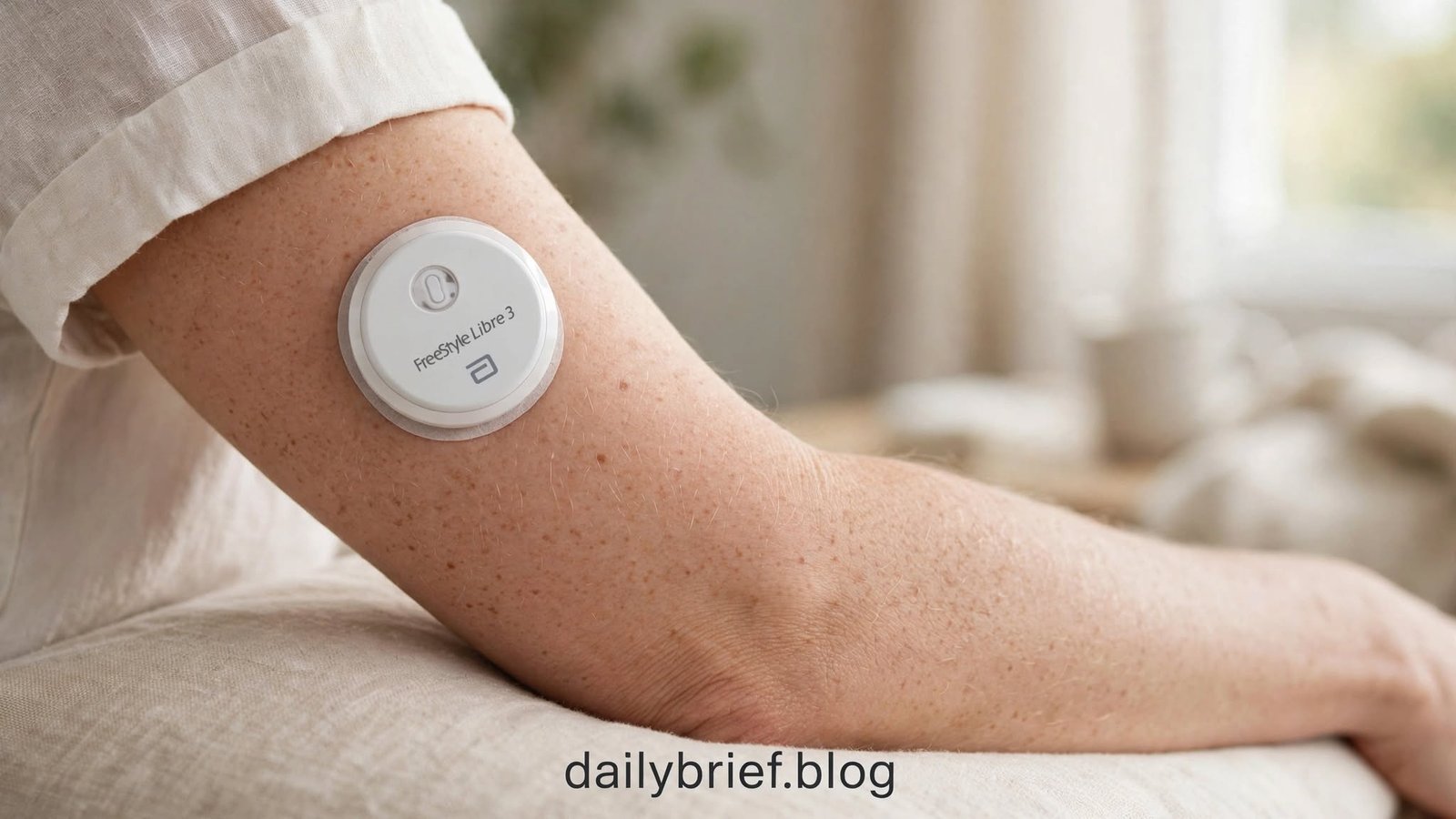
The Freestyle Libre 3 is a continuous glucose monitoring (CGM) system designed to help people with diabetes track their glucose levels without routinely checking their blood sugar using finger-prick tests. It uses a small wearable sensor to measure glucose in the fluid beneath the skin and sends readings to a compatible smartphone, helping users understand how their glucose levels change throughout the day and night.
For people who want more insight into their glucose patterns, the Freestyle Libre 3 offers a convenient alternative to traditional blood glucose monitoring. Instead of relying only on occasional measurements, users can view ongoing readings, review trends, and receive alerts when glucose levels move beyond their chosen thresholds, where supported. However, the system has practical considerations, including sensor compatibility, regional availability, prescription requirements, and cost. Understanding how it works and what it can—and cannot—do helps you decide whether it suits your diabetes management needs.
What Is Freestyle Libre 3?
The Freestyle Libre 3 is a wearable glucose monitoring system developed by Abbott. It is part of the FreeStyle Libre family, which provides continuous glucose information to people who need to monitor their glucose levels. Unlike a traditional blood glucose meter, which measures glucose in a drop of blood, the Freestyle Libre 3 sensor measures glucose in interstitial fluid.
This fluid surrounds the body’s cells, so its glucose readings can differ slightly from blood glucose readings, particularly when glucose levels are changing rapidly. The sensor is worn on the back of the upper arm, according to the product’s approved instructions. It collects measurements automatically and communicates with a compatible device, reducing the need to scan the sensor manually in the standard real-time monitoring setup. The system is designed to support diabetes management rather than replace professional medical advice. Users should follow their healthcare professional’s recommendations for interpreting readings, setting glucose targets, and adjusting treatment.
Freestyle Libre 3: Quick Facts
- Product type: Continuous glucose monitoring system.
- Manufacturer: Abbott.
- Primary purpose: Tracking glucose levels and trends.
- Sensor location: Back of the upper arm, following the approved instructions.
- Reading method: Automatic glucose measurements.
- Display device: Compatible smartphone or other approved device, depending on the specific system.
- Sensor duration: Up to 14 days for the original Freestyle Libre 3 sensor in markets where that duration is approved.
- Connectivity: Bluetooth-based communication with compatible devices.
- Intended users: People who meet the product’s local age, medical, and regulatory requirements. Product specifications, compatible phones, sensor duration, and approved indications may vary by country and product version. Check the official local product information before purchasing.
Key Features of Freestyle Libre 3
The Freestyle Libre 3 combines automatic glucose tracking with a smartphone app, making it easier to identify patterns without repeatedly performing finger-stick tests.
1. Real-Time Glucose Monitoring
The sensor sends glucose readings to a compatible smartphone automatically, typically every minute. This allows users to check current glucose levels and see whether they are rising, falling, or remaining relatively stable. Continuous readings can be particularly helpful after meals, during physical activity, and overnight. Instead of relying on isolated measurements, users can review how different activities affect their glucose levels.
2. Small and Discreet Sensor
The Freestyle Libre 3 sensor is designed to be compact and lightweight. It attaches to the back of the upper arm and can be worn under many everyday clothing styles. Its discreet design may suit people who want to monitor glucose while working, exercising, travelling, or sleeping. Proper application and skin preparation are important for maintaining reliable sensor contact.
3. Optional High and Low Glucose Alerts
The system can provide alerts when glucose crosses configured high or low thresholds, provided the relevant features are supported and enabled. These notifications may help users respond to glucose changes sooner. Alerts are not a guarantee that every glucose event will be detected. Your phone must be compatible, appropriately configured, charged, and within the sensor’s communication range.
4. Glucose Trend Arrows and History
The app displays more than a single glucose number. Trend arrows help users understand the direction in which glucose is moving, while historical graphs show how readings have changed over time. This information can support conversations with healthcare professionals about meals, exercise, medication timing, and glucose management goals.
5. Data Sharing and Reports
Depending on the local app and available services, glucose information can be shared with a healthcare professional through compatible digital reporting tools such as LibreView. Reports can make it easier to identify recurring patterns and discuss possible treatment adjustments during appointments.
How Does Freestyle Libre 3 Work?
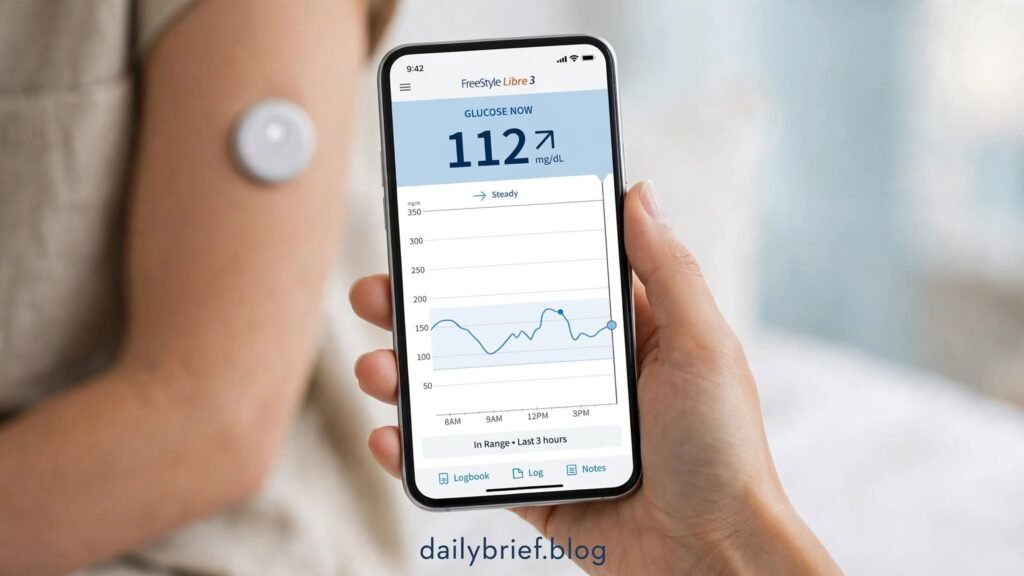
The Freestyle Libre 3 uses a small sensor filament inserted just beneath the skin to measure glucose in interstitial fluid. An electronic component processes these measurements and transmits glucose information to a compatible device. Here is how the process works:
- Apply the sensor: Follow the manufacturer’s instructions to attach the sensor to the approved area of the upper arm.
- Activate the sensor: Use the compatible app or approved reader to start the sensor.
- Complete the warm-up period: Wait for the specified start-up time before relying on readings.
- View glucose readings: Check the app for the current measurement, trend arrow, and glucose graph.
- Review patterns: Use historical data to understand glucose changes throughout the day.
- Discuss results with your healthcare professional: Use the information to support appropriate diabetes management decisions. One important detail is that interstitial glucose does not always change at precisely the same time as blood glucose. During rapid changes, sensor readings may lag behind blood glucose measurements.
Freestyle Libre 3 Accuracy: What Should You Know?
Accuracy is one of the most important factors when choosing a continuous glucose monitor. The Freestyle Libre 3 is designed to provide useful glucose measurements, but no CGM is perfectly accurate in every situation. Readings may be affected by several factors, including rapid glucose changes, sensor placement, the initial wear period, pressure on the sensor, and certain medications or supplements. For example, lying directly on the sensor during sleep may sometimes produce an unexpectedly low reading. This is often called a compression low and should be evaluated rather than automatically assumed to be a genuine glucose drop. Important safety advice: If a reading does not match how you feel, appears implausible, or triggers an unexpected treatment decision, confirm your glucose with a blood glucose meter and follow your healthcare professional’s instructions. Do not ignore symptoms simply because the sensor displays a normal reading.
A Safety Check Before Using Freestyle Libre 3
In November 2025, Abbott announced a correction affecting certain Freestyle Libre 3 and Freestyle Libre 3 Plus sensors in the United States after identifying that some sensors could provide falsely low readings. The US Food and Drug Administration published information about this action in January 2026.
+1 If you use or purchase these products, check the sensor’s status through the manufacturer’s official instructions and recall information. Do not use a sensor confirmed to be affected; follow the instructions for replacement and disposal. This notice concerns specific affected sensors, not every sensor. Users should verify the individual product rather than assume that all units are affected.
Freestyle Libre 3 vs. Traditional Blood Glucose Meters
Both continuous glucose monitors and traditional blood glucose meters help people monitor glucose, but they provide different types of information.
| Feature | Freestyle Libre 3 | Traditional glucose meter |
|---|---|---|
| Measurement | Interstitial fluid | Blood sample |
| Reading frequency | Automatic, continuous monitoring | When a test is performed |
| Finger-prick testing | Usually reduced, but a meter is still needed for confirmation when indicated | Required for each standard measurement |
| Trend information | Current readings, arrows, and graphs | Usually individual readings |
| Alerts | Available features depend on the system and settings | Generally no continuous alerts |
| Wearable sensor | Yes | No |
| Ongoing costs | Replacement sensors | Strips and lancets |
The main advantage of continuous monitoring is visibility into glucose trends between individual tests. A blood glucose meter remains valuable for checking readings when symptoms and sensor results disagree or when the system instructs you to confirm a result.
Freestyle Libre 3 vs. Freestyle Libre 3 Plus
The Freestyle Libre 3 and Freestyle Libre 3 Plus are related products, but they are not identical in every respect. Their wear duration, approved uses, and compatibility with other diabetes devices can differ.
| Feature | Freestyle Libre 3 | Freestyle Libre 3 Plus |
|---|---|---|
| Sensor wear | Up to 14 days in the US | Up to 15 days in the US |
| Glucose monitoring | Automatic readings | Automatic readings |
| Smartphone compatibility | Supported devices only | Supported devices only |
| Automated insulin dosing | Not approved for use with AID systems under US labeling | Compatible with certain approved AID systems, subject to requirements |
| Age eligibility | Depends on local approval | Depends on local approval |
The manufacturer’s US information distinguishes the original 14-day sensor from the 15-day Libre 3 Plus sensor and specifies different compatibility requirements.
+1 If you use an insulin pump or automated insulin delivery system, verify the exact sensor model required by your device. Do not assume that the two sensors can be substituted for each other.
How Much Does Freestyle Libre 3 Cost?
The cost of Freestyle Libre 3 depends on the country, supplier, prescription requirements, insurance coverage, and number of sensors purchased. In the United States, insurance or other healthcare coverage may reduce the amount a user pays. Without coverage, the total expense can include sensors, a compatible smartphone or reader, and any additional supplies required. In Pakistan and other markets where availability may be limited, prices can vary considerably between importers and medical-device suppliers. Confirm that a seller provides genuine products intended for your region and check the expiry date, packaging, and storage requirements before purchasing. To estimate your actual cost, consider:
- The price of each sensor.
- How many sensors you will need each month.
- Delivery charges and applicable taxes.
- Whether your phone or reader is compatible.
- Any insurance, reimbursement, or local healthcare assistance. Because sensors have a limited wear period, calculate the recurring monthly cost rather than comparing only the price of a single package. For the most accurate price, consult an authorized local supplier or the manufacturer’s regional website.
Benefits and Limitations of Freestyle Libre 3
Understanding both the advantages and drawbacks helps you decide whether the system fits your needs.
Benefits
- Fewer routine finger-prick tests: Continuous monitoring can reduce the need for repeated manual checks.
- More glucose information: Readings and graphs reveal changes that occasional measurements may miss.
- Convenience: Automatic updates reduce the need to scan the sensor in the standard Libre 3 real-time setup.
- Potentially earlier awareness: Configured alerts may help users notice high or low glucose levels.
- Better-informed discussions: Reports can help healthcare professionals identify patterns and review diabetes management.
Limitations
- Recurring expense: Sensors need regular replacement.
- Device compatibility: Not every smartphone or operating system is supported.
- Possible inaccuracies: Sensor readings may differ from blood glucose measurements.
- Skin irritation: Some users experience sensitivity to the adhesive.
- Connectivity requirements: Phone settings, battery levels, and Bluetooth range can affect data and alerts.
- Limited availability: Access, regulatory approval, and pricing vary by country. The best choice depends on your medical needs, budget, device compatibility, and ability to use the system safely.
Tips for Getting Better Results With Freestyle Libre 3
A few practical habits can make continuous glucose monitoring more useful.
Prepare the Skin Correctly
Clean and dry the approved application site according to the instructions. Avoid applying the sensor to irritated or damaged skin, and do not use unapproved products beneath the adhesive.
Check Smartphone Compatibility
Before buying sensors, verify that your phone model and operating system are supported. Check compatibility again before major operating system updates because an update may affect app functionality.
Keep Alerts Enabled
Review your alert settings and make sure your phone can deliver notifications. Keep it charged, allow the app to run as required, and maintain the recommended communication range.
Keep a Blood Glucose Meter Available
A backup meter is important even when you use continuous monitoring. Follow the product instructions and your healthcare professional’s advice whenever a reading is unavailable, questionable, or inconsistent with symptoms.
Review Patterns Instead of Isolated Numbers
A single glucose reading offers limited context. Reviewing repeated patterns alongside meals, exercise, sleep, and medication can provide more useful information for clinical discussions. Do not change insulin doses or other prescribed treatment solely on the basis of general online advice. Follow your individual diabetes management plan.
Is Freestyle Libre 3 Waterproof?
The sensor is designed to withstand certain water exposures, including bathing and swimming, within the manufacturer’s specified limits. However, water resistance does not mean that the sensor is suitable for unlimited immersion. The US product information specifies water resistance at depths up to 1 meter (3 feet) for no longer than 30 minutes.
FreeStyle Libre US Check the instructions supplied with your particular sensor, especially if you swim frequently or take part in water sports. Inspect the sensor afterward and follow the manufacturer’s guidance if it becomes loose.
Who Should Consider Freestyle Libre 3?
Freestyle Libre 3 may be suitable for people with diabetes who want more detailed information about glucose changes throughout the day. It may be particularly useful for individuals who need to understand overnight trends, exercise-related changes, or the effects of meals. It can also help healthcare professionals review glucose patterns and discuss treatment strategies with patients. However, suitability depends on age, diabetes type, local regulatory approval, clinical circumstances, and the ability to respond appropriately to readings and alerts. A healthcare professional can help determine whether a CGM is appropriate for your situation. The device is not a substitute for medical supervision, and people should not start, stop, or adjust treatment without appropriate clinical guidance.
Frequently Asked Questions About Freestyle Libre 3
How long does Freestyle Libre 3 last?
The original Freestyle Libre 3 sensor can be worn for up to 14 days in the United States. The Libre 3 Plus has a wear duration of up to 15 days there. Follow the approved duration for your particular model and region.
Does Freestyle Libre 3 require finger pricks?
However, you should keep a blood glucose meter available and confirm readings when required by the instructions or when your symptoms do not match the sensor result.
Can Freestyle Libre 3 be used without a smartphone?
Depending on the market and product setup, an approved reader may be available as an alternative to a compatible smartphone. Confirm that the reader supports your exact sensor model before purchasing.
Can I shower while wearing Freestyle Libre 3?
Follow the instructions for showering, swimming, and other water-related activities.
Is Freestyle Libre 3 suitable for children?
Age eligibility depends on the specific sensor and local approval. In the United States, the original Libre 3 and Libre 3 Plus have different approved minimum ages, so parents should check current product labeling and consult a child’s healthcare professional.
Can Freestyle Libre 3 replace insulin management advice?
No. The system provides glucose information, not an individualized treatment plan. Use the data in accordance with your healthcare professional’s guidance.
Conclusion
The Freestyle Libre 3 offers continuous glucose monitoring, automatic readings, trend information, and optional alerts to help eligible users understand their glucose patterns. Its small sensor and smartphone connectivity can make daily monitoring more convenient than relying exclusively on occasional finger-prick tests. Before purchasing, compare the original sensor with the Libre 3 Plus, verify compatibility, calculate recurring costs, and check current safety notices. Most importantly, use the system according to its approved instructions and seek professional guidance when interpreting readings or making treatment decisions.